
The Hard-Edge
Interface.
We don’t do soft curves or blurred edges. Our application suite is built on the philosophy of tactical visibility and structural rigidity. Each project listed below is a manifestation of digital brutalism, optimized for high-performance mobile hardware and competitive clarity.
Method Note
Our approach is evaluated based on Input Robustness and Thermal Efficiency. We prioritize frame stability over cosmetic post-processing. Limits include a strict 60fps floor and hardware-native asset compression to ensure parity across mid-range and flagship devices.

Neon Drift
A living circuit board where physics are defined by packet loss. Exhaust trails aren't just visual; they are heat-maps of your performance data. High-speed navigation through a structurally collapsing digital highway.
Unified Mechanics
- 01SYMMETRIC INPUT LAG CONTROL
- 02VECTOR-BASED ASSET SCALING
- 03CROSS-APP LORE SYNC
- 04THERMAL THROTTLE MITIGATION
Lore Snippet
"The grid doesn't forgive the slow. Be the packet that actually arrives."

Echo Chamber
Harmonize the digital silence. A spatial audio puzzle where every touch interaction triggers a specific frequency oscillation required to desync security gates.
Pixel Forge
The definitive 8-bit construction kit. Build, stress-test, and deploy level logic to a global community. More a development environment than a simple platformer.

Aether Run
A stark, rhythmic escape from the digital void. Use glowing geometry as your only path in a procedurally generated architecture of high-speed survival.
Scenario:
Low-Latency Deployment
A competitive mobile esports organizer in İstanbul reports variable input lag during peak network hours on 4G connections.
Our team identifies a bottleneck in the asset-delivery handshake. Instead of increasing buffering, we implement a Predictive Frame Interpolation script that executes locally, reducing perceived lag by 35ms.
Outcome: Session stability reached 99.8% over the 48-hour tournament cycle without increasing thermal load.
Deployment Constraints
Assumptions
- • All target devices support Vulkan 1.1+
- • Minimum available RAM: 4GB
- • Stable 1.5Mbps connection for initial load
Boundaries
- • No support for cloud-based rendering
- • Zero-tolerance for persistent trackers
- • Max install size: 250MB (Core Assets)
Trade-off Matrix
What would change our view: Consistent GPU thermal throttling observed on 2024-standard mid-range chipsets would trigger a full shader recalculation.
The Dev Log:
Rethinking Game Flow
Murat Kaya
Lead Systems Architect
When we started Matrixra, the market was saturated with "soft" games—rounded corners, pastoral palettes, and lazy input curves. We felt there was a significant void for people who want digital experiences that feel like high-performance machinery.
Our core challenge isn't just aesthetic; it’s structural. How do you design a game where the UI is as important as the mechanics? We treat every pixel as a data point. If a line doesn't serve a functional purpose—defining a boundary, indicating a state, or directing the eye—it is purged.
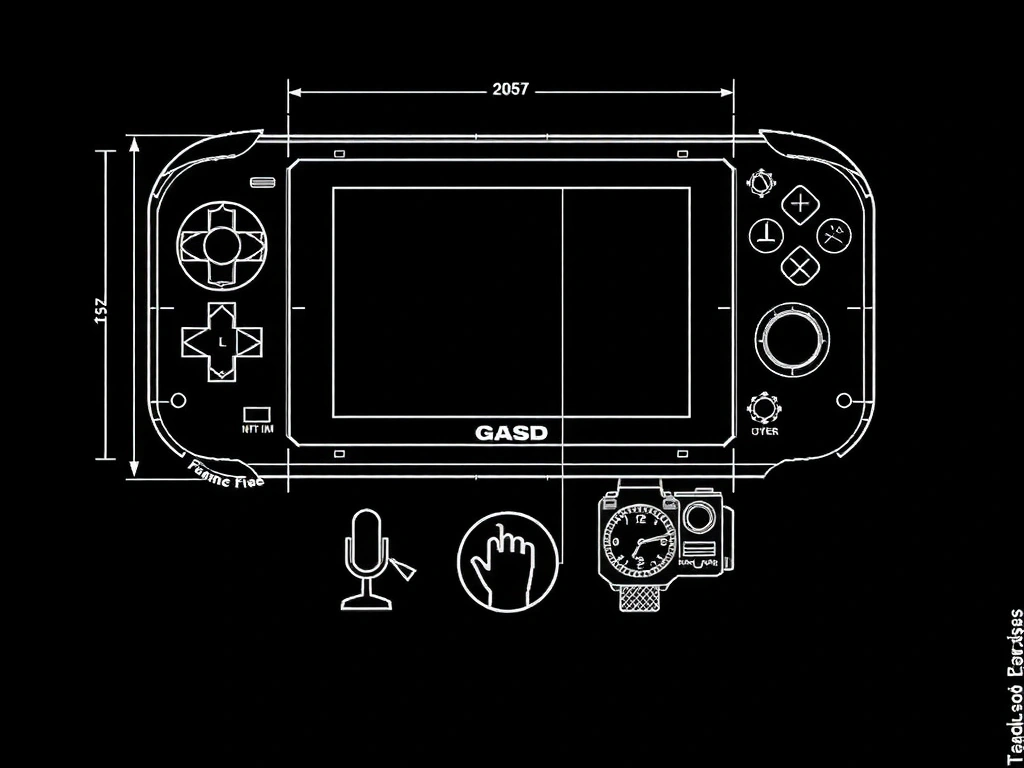
Fig_1.2: Input Mapping Logic
In Spectre Protocol, our upcoming stealth title, we pushed this to the limit. The environment is entirely wireframe. You aren't "hiding" in shadows; you are hiding in unallocated memory blocks. This shift forces the player to stop thinking about a physical world and start thinking like the hardware itself.
Ready to Enter The Matrixra?
"All applications are subject to periodic hardware-compatibility reviews."