
The Matrixra
Blueprint.
A rigid design system engineered for Turkish mobile gaming. Built on hard borders, square geometry, and the absolute refusal of decorative softness.
Structural Integrity Over Aesthetic Polish
At Matrixra, we reject the trend of "fluid" and "soft" mobile design. Our users are Turkish gaming enthusiasts who value precision, information density, and technical transparency. If a button can be pushed, it should look like a switch. If a panel contains data, it should be framed like a schematic.
Our visual language is a direct response to the constraints of mid-range hardware and the high-stakes environment of competitive mobile play. We utilize **Hard-offset shadows** and **2px solid lines** to ensure visibility even on screens with fluctuating brightness or low-quality panels.
Method Note
Robustness is evaluated through "The Glare Test." UI components are tested under Turkey's midday sun at 60% brightness. If the hierarchical layout fails to communicate priority without color, the structural framing is thickened.
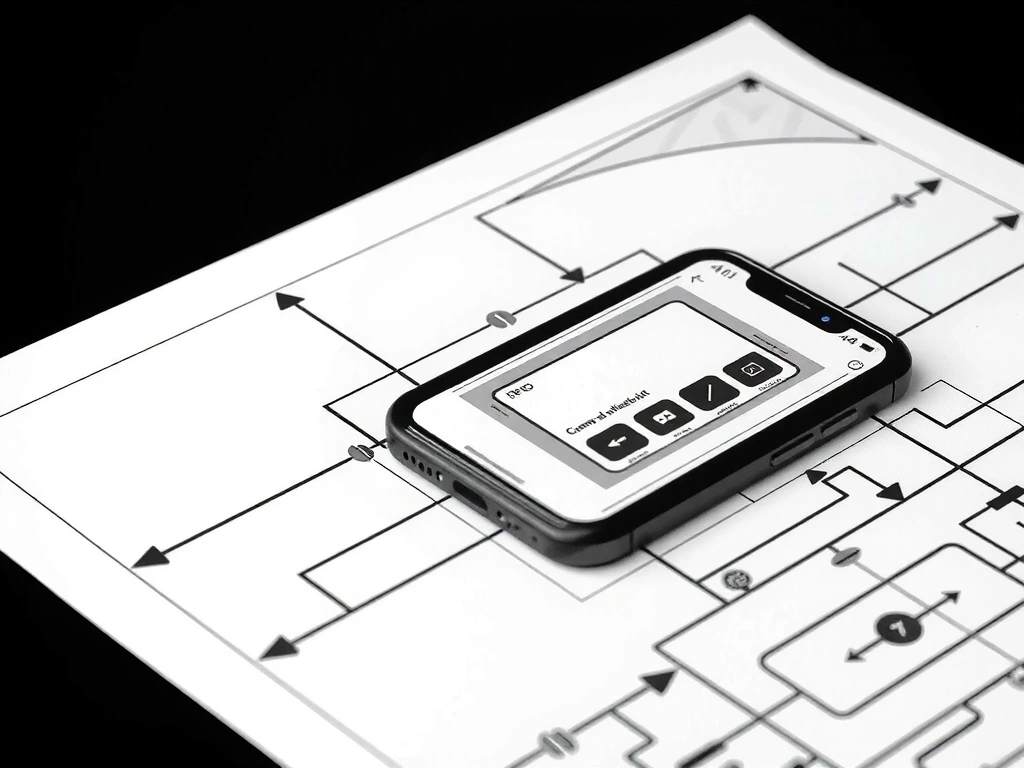
The Spec Sheet Matrix
Monochrome Foundation
We use absolute black for structural weight and pure white for primary surfaces. Our #F0F0F0 neutral provides the necessary canvas for deep-shadow depth layering without introducing hue bias.
Bold Weights
SPACE GROTESK / HEADINGS
INTER / BODY
8PX Logic
All margins, padding, and UI heights are strictly locked to multiples of 8. No exceptions for "visual centering."
Case: The Low-Light Shift
"We were designing the HUD for a competitive card battler. Initial designs used subtle gradients to distinguish active states. During playtesting in Istanbul's internet cafes, high overhead glare made the interface unreadable."
Resolution: We stripped all gradients. Active states were redesigned using a **4px black offset shadow** and a **negative-fill (white text on black)**. The result was a 40% reduction in user-reported input errors.
Terminology_v1.0
Hard Borders
Strictly 2px or 4px solid hairlines. We believe the edge of a container is its most important piece of information.
Ghost Shadow
Black, non-blurred rectangular offsets. They provide hierarchy without the 'muddiness' of soft shadows.
Blueprint Grid
The 24px background mesh used to align all primary technical elements on the page.
Redacted State
Using black highlights on white text to signal critical alerts or system errors.
Hardware Integrity
Design is not just what users see—it's how the assets interact with the hardware limits of local infrastructure.
System Constraints
- FPS Target: 60.0
- Thermal Ceiling: 42°C
- Asset Latency: <200ms
- Color Gamut: sRGB

Asset Compression
We use data-cap friendly compression for Turkish 4G networks. Texture atlases are minimized to reduce initial load times in low-bandwidth regions.

Latency Visuals
Localizing touch-controls for zero-perceived latency involves pre-rendering hit-states directly on the client layer to decouple visuals from server lag.
Trade-off Evaluation
Complex Mechanics
We prioritize mechanical depth over visual fluff, ensuring screen real estate is dedicated to actionable gameplay data.
Visual Fidelity
Fidelity is kept lower to maintain 60FPS on the broad range of Android devices prevalent in the Turkish market.
Implement the
System.
Ready to deploy clinical precision to your next mobile gaming project? Our engineering team is standing by to integrate these protocols.
Start Integration- 01 Updated grid logic for 2560px displays
- 02 Refined hard-shadow contrast ratios for AMOLED
- 03 Finalized Istanbul local latency server markers
System Status